People rarely go on a dark retreat out of mere curiosity. More often there is a specific situation behind it: tiredness that won’t let up, a decision you can’t bring yourself to make, or a feeling that life is going round in circles. In this article we look at five such situations. For each one we describe how it usually shows up and what a few days in the dark can offer you. At the end you’ll find when it’s better to wait, along with practical tips for your first experience.
One thing up front: a dark retreat is not a treatment. It is a stretch of time when, for a few days, everything that normally keeps your eyes and mind busy falls quiet. What you do with that time is up to you.
1. You feel burnt out
Tiredness that doesn’t go away after a weekend or even a holiday. You don’t want to get up in the morning, and work you used to enjoy has suddenly become a chore. You’re more irritable, less joyful, and every now and then you wonder why you’re doing any of it.
At a time like this, darkness offers above all rest. No screens, no news, no demands from the people around you. You can sleep whenever your body wants, eat without rushing and you don’t have to keep up with anything. For some people it is the first chance in a long time to find out how tired they really are and what is draining them.
If the exhaustion runs deeper, though – you have been sleeping badly for several weeks, you lack the energy for everyday things, or you notice anxiety or a sense of hopelessness – see a doctor or psychologist first. Burnout can overlap with depression, which is one of the conditions in which a dark retreat is not recommended. You’ll find more details in the article on contraindications for a dark retreat.
2. You don’t know where to go next
Sometimes it isn’t about one specific decision but about a general sense of having lost your direction. The children have grown up, a long chapter at work has ended, a relationship has come to a close, or you have simply achieved what you once wished for and now don’t know what comes next. The days go by, but they lack meaning.
In the dark, your usual daily rhythm falls away, and so do the roles you normally play – parent, colleague, partner. What remains is just you. In the silence, things may surface that there was no time for in everyday life: old longings, unresolved questions, whatever is missing. The darkness won’t give you the answer, but it can help you hear what you already know.
3. You need to make a big life decision
Change jobs or stay? Carry on with a relationship? Move to another city or abroad? The trouble with big decisions is often that we hear too many voices at once. Family, friends, colleagues and the internet all give advice. Everyone has an opinion, and your own can easily get lost among them.
A dark retreat is a space free of distractions and other people’s opinions. You can calmly imagine each option, go through them again and again, and notice how your body and emotions respond. Without outside pressure it often becomes clear which option draws you in and which one you are simply afraid of. You don’t have to make the decision itself in the dark, though – it’s enough to come away with a clearer view.
4. You’re planning a new project
You’re planning to start a business, write a book, launch a creative project or make a big change in the way you live. You have plenty of ideas, but they keep going round in circles. You don’t know where to start, what matters and what is merely interesting.
Darkness helps you sort out your thoughts. Without outside stimuli, your mind has time to go through ideas one by one, and the important ones usually come to the fore on their own. It helps to bring questions such as:
- Why do I actually want to do this?
- What is the first step I can take as soon as I get back?
- What am I afraid of, and is that fear justified?
- What will I have to give up for this project?
Taking notes in the dark is tricky, so expect to keep important thoughts in your head and write them down after the retreat. The truly essential ones rarely slip away.
5. You want to get to know yourself better
Not everyone comes to the dark with a problem. Some are drawn by curiosity: what is it like to spend several days alone with yourself? Others meditate and are looking for a longer, deeper silence than they can manage at home. Still others want to find out what surfaces when there is nowhere to run.
Darkness is a good teacher in this respect. You’ll see how your mind works when it has nothing to distract itself with. Sometimes calm comes, at other times restlessness, boredom, memories or strong emotions. All of it is part of getting to know yourself. You don’t have to achieve anything – it’s enough simply to be and observe.
When it’s better to wait
There are times when darkness is more likely to add to the burden than to help:
- Acute crisis. If things around you are falling apart right now, or you feel you can’t cope psychologically, you need support from people, not solitude. Turn to those close to you or to a professional.
- Recent loss of a loved one. For some people a dark retreat helps them work through their grief; for others it deepens it out of proportion. Decide for yourself, don’t rush, and make sure that when you come back there is someone around you can lean on.
- Health. Mental illness, epilepsy, certain medications or serious physical problems may rule out a retreat. Before booking, read through the contraindications and if in doubt, consult a doctor.
How to prepare for your first retreat
How long a retreat to choose
For a first experience it makes sense to start with a shorter retreat of around two to four days. On the first day your body and mind are only just getting used to the dark, so a very short stay may not give you enough time to settle in. Longer retreats are more worthwhile once you know how you respond to darkness. It’s also worth asking the centre what length it recommends for beginners. You can compare retreat lengths and prices at the individual centres in the dark retreat price comparison.
Ask yourself a question or set an intention
Before the retreat, pause and try to put into words why you are going into the dark. It doesn’t have to be anything big. It helps to phrase your intention in a single sentence and, ideally, write it down on paper, for example:
- “I want to rest and find out what is wearing me out so much.”
- “I want to get clear on whether I should leave my job.”
- “I want to find out what really matters for my project.”
- “I want to spend some time alone with myself and see what happens.”
Treat your intention as a compass, not a task. In the dark, something completely different from what you expected often comes up, and that’s fine too. Don’t try to force a result.
In conclusion
A dark retreat can make sense when you are exhausted, have lost your direction, are facing a decision, are preparing something new or simply want to get to know yourself better. It offers silence, time and space without distractions – the rest you bring yourself. If one of the situations described here resonated with you, take your time to browse the list and map of dark retreat centres and choose one that suits you.
This article is for general information only and does not replace medical or psychological advice.
Read next
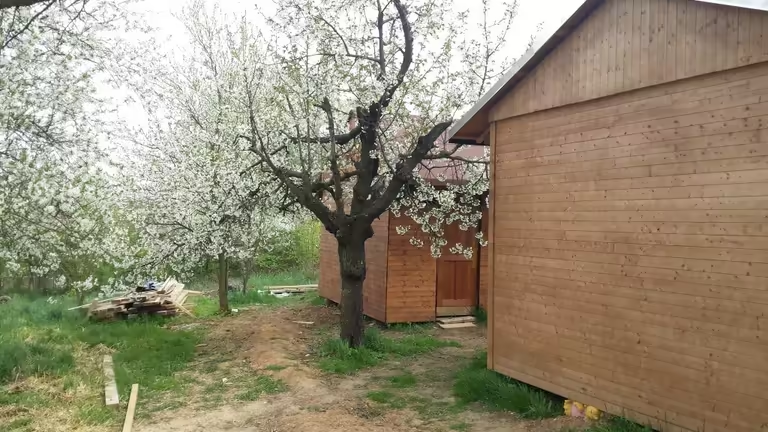 When to go on a dark retreat: a season-by-season guideSummer, autumn, winter or spring? Each season brings something different to a dark retreat. Here is when to…Read more
 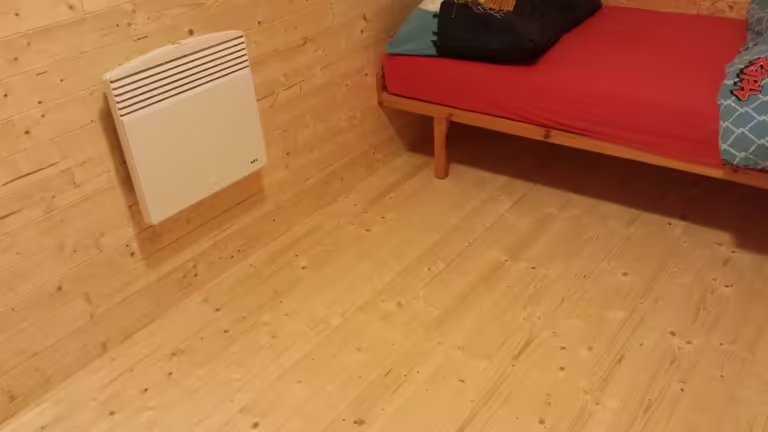 How to prepare for a dark retreat: from packing to returning to the lightWhat to sort out at work and at home, how to prepare your body and mind, what to…Read more
 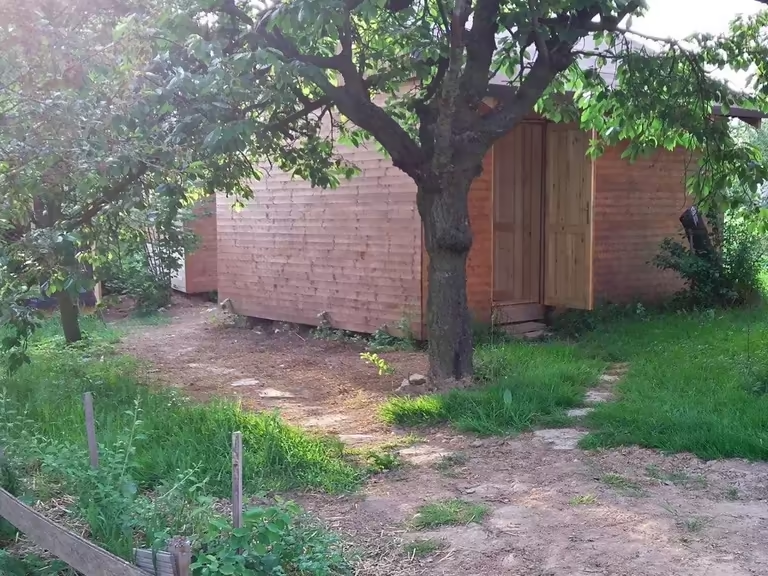 How to spot a good dark retreat centre: what to look for when choosingA private cabin, rural quiet, honest reviews and a guide who doesn’t push their worldview on you. How…Read more