A dark retreat can bring deep rest, calm and a fresh perspective on yourself. At the same time, it is an intense experience: several days without light, often without other people and without the usual stimuli. That is why it is not suitable for everyone, and it is worth taking an honest look at your health before you book. This article explains when a dark retreat is not recommended, when caution is called for and how the rules differ from one centre to another.
When a dark retreat is not suitable
A dark retreat is generally not recommended in the following cases:
- acute mental health problems or a mental health crisis,
- a psychotic illness or psychotic episode, including in the past,
- severe depression, strong anxiety or panic attacks,
- self-harm or suicidal thoughts,
- severe insomnia or marked psychological instability,
- epilepsy or other neurological conditions involving seizures,
- an acute infection or fever,
- serious heart disease or another condition that requires regular medical supervision,
- alcohol or drug dependence, or being under the influence of alcohol or drugs,
- marked claustrophobia or fear of the dark, unless you have thought the retreat through carefully and discussed it with the centre beforehand.
When extra caution is needed
In the following situations a retreat may still be possible, but it is worth discussing it first with a doctor or therapist and then with the centre:
- you take psychiatric medication,
- you are currently in psychotherapy or being treated for mental health problems,
- you are very sensitive to solitude, silence or altered perception,
- you are pregnant,
- you have a chronic illness that may require special care during the retreat,
- you are older, or on the contrary very young,
- you have recently been through a major life event, such as the death of someone close, a break-up or burnout.
Every centre does it differently
General rules are one thing, a centre’s specific conditions are another. While going through the websites of the centres in our catalogue, we came across big differences:
- Age. Most centres accept only adult guests with full legal capacity. Some also take younger guests, but only with written parental consent.
- Mental health. Many centres rule out not only current mental illness but also any in the past. In that case some ask for a doctor’s certificate, while others refuse the retreat altogether.
- Medication and addictive substances. A ban on alcohol and drugs before and during the retreat is common. Some centres also exclude the use of psychiatric medication or any treatment that would stand in the way of the retreat.
- Declarations and questionnaires. At several centres guests sign a declaration about their health before arrival; elsewhere you describe your health when booking, or there is an initial interview or examination.
- Nothing stated. Roughly a third of the centres do not mention contraindications on their website at all. That does not mean they have none; you simply have to ask about them yourself.
You will find each centre’s health restrictions on its page in the Price and conditions section. You can browse the centres in the overview of dark retreat centres or compare them in the comparison of prices and conditions.
What to ask before booking
- What health restrictions the centre has and whether it needs a doctor’s certificate.
- Whether a guide is available during the retreat and how you can call them if needed.
- Whether you can end the retreat at any time and how that works.
- What length of retreat the centre recommends for a first experience.
- What the centre needs to know about your medication or diet.
Guidelines for a safe retreat
- Arrive sober and in as stable a physical and mental state as possible.
- Tell the centre truthfully everything important about your health.
- If you are not sure, start with a shorter retreat.
- Be prepared for the darkness to bring up strong emotions, memories or physical reactions.
- Do not be afraid to end the retreat if it becomes too demanding. Leaving is fine.
A dark retreat is a voluntary and intense form of rest and self-discovery, not a treatment for illness. If you are unsure whether it is right for you, discuss it beforehand with your doctor or therapist and then with the centre you have chosen.
This article is general information and does not replace medical advice.
Read next
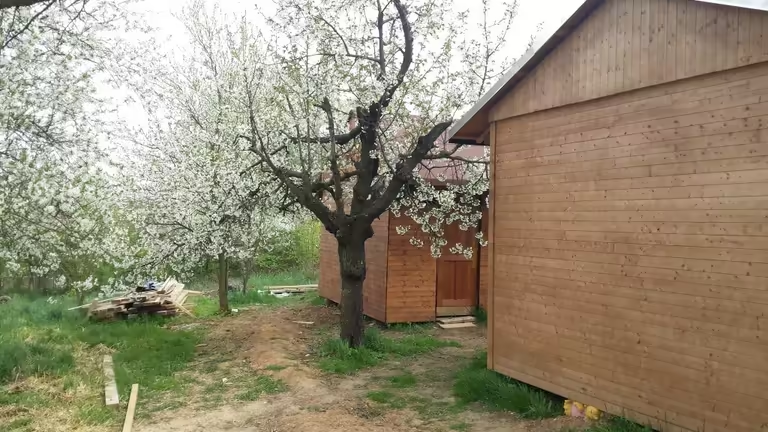 When to go on a dark retreat: a season-by-season guideSummer, autumn, winter or spring? Each season brings something different to a dark retreat. Here is when to…Read more
 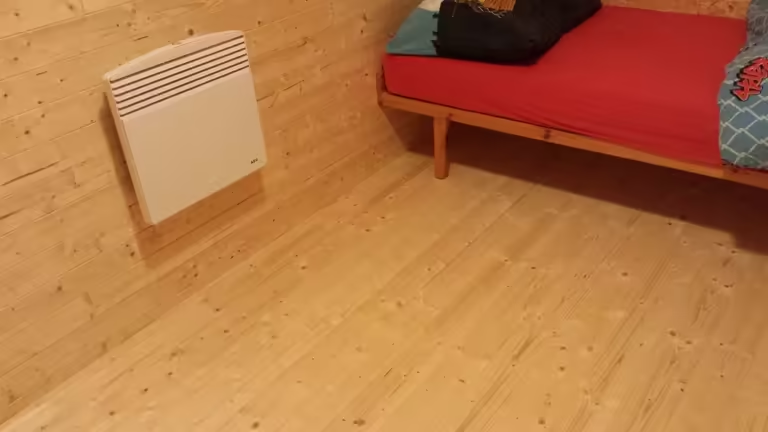 How to prepare for a dark retreat: from packing to returning to the lightWhat to sort out at work and at home, how to prepare your body and mind, what to…Read more
 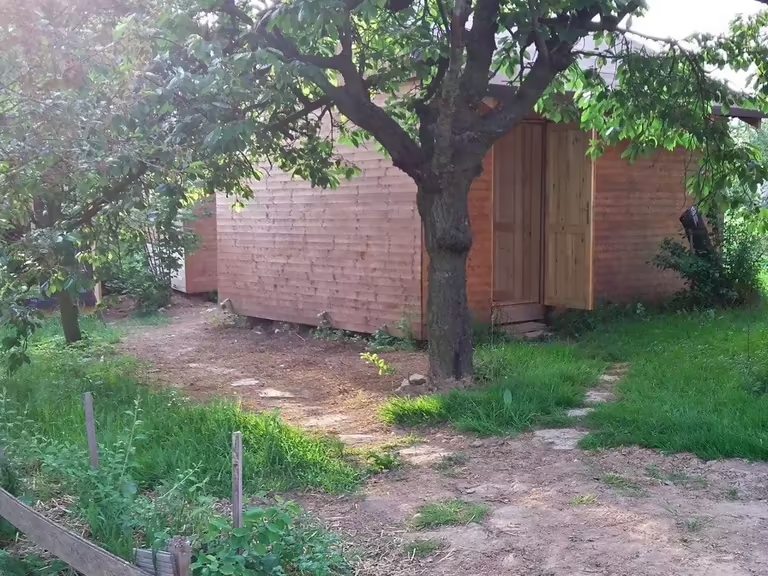 How to spot a good dark retreat centre: what to look for when choosingA private cabin, rural quiet, honest reviews and a guide who doesn’t push their worldview on you. How…Read more